
“Detested Sport, that owes its pleasures to another’s pain.” William Cowper
“Wild animals never kill for sport. Man is the only one to whom the torture and death of his fellow-creatures is amusing in itself.” J. A. Froude
I.
It was one of the pleasures of English life in the past to know many brave, independent men and women, some slightly eccentric in character, but none the worse for that. I think of Auberon Herbert, Edward Carpenter, Wilfrid Scawen Blunt, Cunninghame Graham, Edward Thomas, Margaret McMillan, Keir Hardie, Mrs. Despard, George Lansbury, Havelock Ellis, Bernard Shaw, Eva Gore Booth, A. R. Orage, Hilaire Belloc, Arthur Lynch, Henry Salt, Richard Jefferies, W. H. Hudson, and Bertram Lloyd. They were of a distinction of mind and thought and chose their own path. They strove to leave the world, “this busy contentious covetous world”, as Richard Baxter called it, a little the better. They fought always against cruelty and wrong either to man or beast.
Bertram Lloyd had many absorbing interests : it is by no means easy to describe them all. His life was “a pilgrimage of grace”, not of narrow or conventional living. On the one side a brooding, introspective but powerful mind : on the other, the quick awareness of the world’s woe, a desire to fight in the van for liberty and happiness.
Bertram was a research worker and observer of great skill in the study of birds and dragon flies, and a keen field naturalist. In scholarship he knew German Literature and German music. In youth, soon after leaving Merchant Taylor’s school, he spent two years in Germany. He translated German poetry with felicity. He knew several other languages too, and translated verse from them.
From 1935 onwards, Bertram edited the Hertfordshire Natural History Transactions. He was a Fellow of the Linnean Society and continued his studies in natural history and bird watching until the close. From the Naturalist point of view “the county of Hertfordshire is the Tring reservoirs and some 630 square miles of other country.” Many birds flourish there ; some species scarce elsewhere ; for parts of Hertfordshire of late years have been greatly urbanized. Urbanization in fact, has increased from ten per cent in 1934 to 25 per cent in 1954.
One of Bertram’s most valuable achievements was his work in the Humanitarian Movement, often in conjunction with his friend, Henry Stephens Salt, who had been a master at Eton for twelve years until he resigned to write and work for the Humanitarian Cause. Like Salt, Bertram was a vegetarian from early years. Their crusade against cruelty and wrong to man and animals — Salt wrote powerfully against the ‘Flogging Craze’, — led to the founding of the National Society for the Abolition of Cruel Sports, in which Bertram Lloyd was associated with Henry Salt, Charles Oldham, Jessy Wade, and W. A. Sibley, Headmaster of Wycliffe College. As its dedicated and energetic Honorary Secretary the Society meant constant work and effort until the end of Bertram’s life.
As well as depth and agility of mind Bertram possessed intense physical activity ; he was an athlete in his youth, and later, an enthusiastic and skilled mountaineer and traveller in Norway, the Alps of Austria and Switzerland, the Dolomites and Yugoslavia. On many of these expeditions his wife climbed with him. In earlier years he did some rock climbing and scrambling in Wales and the Lake District and later in life, the wild beauty and isolation of much of Pembroke became very dear to him.
The beauty of the world which surrounding Bertram he loved to the uttermost ; he had felt since childhood the benediction of sun, sea and sky, the appeal and the loneliness of the great hills. Before many years had touched his brow, he became conscious of the poverty and suffering which was the lot of many. Nor could he seek in supernatural consolations for an answer to the enigmas of life and the sufferings of mankind! He knew only too well what the great Spanish philosopher Unamuno called the ‘Tragic Sense of Life’.
Bertram was impressively modest and simple and disarming in his sincerity. He valued men and women for what they were without any sense of class, and would meet with kindness and understanding all conditions of folk. He preferred the simplicity of the uncomplicated mind to that of the ‘fussy intellectual’.
Bertram was a socialist of the school of William Morris, Edward Carpenter and Henry Salt. He had nothing in common with the small-minded, angry, envious men of our own generation who profess Politics. He hated cruelty wherever he found it, especially the unnecessary cruelty and stupidity of Blood Sports, what J. M. Robertson called ‘the religion of the Brutalitarian’ ; the infliction of pain for personal pleasure in the ‘sacred’ name of ‘Sport’. An excessive addiction to Field Sports or a lust for killing animals or birds is related to the fact that “Nature abhors a Vacuum”. I have noticed the same phenomenon stamped upon some of the faces in pictures of boxing or wrestling matches. In a world capable of such cruel and senseless amusements the Atom Bomb and the general waste on Armaments need not surprise us too much! “Against stupidity even the Gods fight in vain!”
Bertram was a Wordsworthian in the sense that he shared that poet’s sympathy with “the sorrow of the meanest thing that feels”.
He disliked all the bogus evil paraphernalia, blooding and the rest, of Hunting, and thought its jargon ridiculous. He loathed too, War and its follies, lies and brutality, its Race Hatreds, the manufacture of atrocities in which Truth was the first casualty. During the progress of war and its aftermath, he specially disliked the glorification, the exploitation of innocence for patriotism, the hypocrisy of the ‘Hollow Men’. He refused to bear arms 1914-1918, but worked for the Friends Emergency Committee in its humane task. Bertram’s attitude was tersely expressed in the title of one of his anti-war anthologies, The Paths of Glory. He thought that slaughter and high explosives are not good international arguments, or true substitutes for sweet reason or mercy. He scarcely believed them, strange to say, Christian in fact! The wanton destruction of beauty, innocent animals and birds, the despoiling of the English countryside for gain, linked up in his mind with “man’s inhumanity to man”.
Bertram desired a Society in which men should be free in body and mind ; in which the love of Power, Power which corrupts, ignoble ambition, personal greed, cruelty, war and the preparations for war, should be subordinated in the Commonweal to the Good Life ; in which Art and Culture should be valued far above mere money-making and social striving. As his unique animal anthology The Great Kinship showed so clearly, he believed that all life was one, that the infliction of pain in the name of Sport in Hunting or the shooting of birds for personal pleasure was mean and vile, a grievous stain upon our reputed civilization. He thought that the intense preoccupation with Sport generally was childish and only fit for the adolescent mind. “The unspeakable in pursuit of the uneatable!” He felt, somewhat wryly, and not happily, the falsity of much of the world’s thinking, and echoed the half sad, half humorous sally of his friend, Henry Salt, who called his autobiography Seventy Years Among Savages.
Mrs. Sylvia Lloyd, a granddaughter of the learned and courageous Bishop Colenso, she who shared Bertram’s life as his chosen and so fitting companion, has been able to carry on at least part of his work, and has edited since his death, hitherto unpublished selections of both his prose and verse. Mrs. Lloyd is herself a fine and most accomplished musician at the piano, and has composed songs of rare quality, some of which have been broadcast, and some performed in Berlin (East and West). I write this tribute to a much loved friend at her request. Con amore.
Bertram was a passionate music lover. He was not only fortunate in his wife’s musical ability, but two of her sisters were talented in this regard. Irma, one of his sisters-in-law had a fine contralto voice, while all three sisters were accomplished musicians. On his many visits to the family home, they would play as a trio on the pianoforte, violin and ‘cello. Music as one of the greatest of the arts was very close to his heart. He was not only an ardent listener, but his comments on music were wonderfully penetrating and intelligent. Bertram and Sylvia went constantly to concerts and recitals whilst in London, not so often to Ballet or Opera, although Bertram was partial to the great operas of Wagner. Among the great composers Beethoven came first. Sylvia would play the Sonatas and it would be difficult to describe Bertram’s enjoyment in either the Moonlight Sonata or the Sonata Appassionata of this eloquent argosy of beautiful sound. Other composers dear to him were Schubert, Tchaikovsky, and Mozart, of whom he said : “His music is so natural and spontaneous that it merely seemed to be waiting to be written down”. Sibelius, especially the songs, and also those of Richard Strauss were loved. As for Chopin, Bertram called him “the Shelley of the piano”, a most apt description of his delicate and evocative genius. To Liszt’s immortal Faust Symphony with its glittering elegance Bertram wrote a poem. But at all times music meant much to him.
II.
I first met Bertram Lloyd at the turn of the century, when he taught English Literature at Toynbee Hall as part of his passion for social service, and was a remarkably good teacher too. I remember on one occasion his striking reading of Tennyson’s melodious poem Ulysses, and his helpful comments :
I am a part of all that I have met ;
Yet all experience is an arch wherethro’
Gleams that untravell’d world, whose margin fades
For ever and for ever when I move.
A few years later, we met at the Fabian Society ; later still, when we were both working at the British Museum Reading Room, I on Richard Jefferies and kindred subjects, and Bertram compiling his most excellent and evocative anthologies against war, and also The Great Kinship, his unique animal compilation, we found much in common, and acquaintanceship ripened into friendship. There was a common bond moreover in that we were mutual friends of Henry Salt. On my visits to Salt at Hove, he would talk much of Bertram, whom he loved, and of his interesting and creative mind, which he found so stimulating ; of his knowledge of poetry, wild flowers, birds and animals, as we walked on the Downs, or tracked the footsteps of W. H. Hudson at Shoreham. I had not before this quite realised the breadth of Bertram’s interests and the depth of his knowledge. I had found James Thomson’s (B.V.) City of Dreadful Night in Dobell’s Bookshop. Its original quality, its strange, sombre and yet haunting music enchanted me. Bertram knew of it and valued and understood its nostalgic beauty of diction. When he was absorbed or excited by some fine piece of prose or verse, one became conscious of the play of an unusual mind in criticism or wise appreciation.
Walking with Henry Salt many years ago on the Downs at Boxhill, just above Flint Cottage, home of that great neglected poet George Meredith, Salt recalled that not long before, on that very spot, Bertram had said that, in his opinion, the Hymn to Colour could vie in splendour of diction with any poem in English, and in illustration quoted :
Shall man into the mystery of breath
From his quick beating pulse a pathway spy?
Or learn the secret of the shrouded death,
By lifting up the lid of a white eye?
Cleave thou thy way with fathering desire
Of fire to reach to fire.
Look now where Colour, the soul’s bridegroom makes
The house of Heaven splendid for the bride.
To him as leaps a fountain she awakes,
In knotting arms, yet boundless ; him beside,
She holds the flower to heaven, and by his power
Brings heaven to the flower.
He gives her homeliness in desert air,
And sovereignty in spaciousness ; he leads
Through widening chambers of surprise to where
Throbs rapture near an end that aye recedes,
Because his touch is infinite and lends
A yonder to all ends.
Then, added Salt, as I too loved Meredith, I asked Bertram what he thought the poet’s most memorable lines and he answered that they were to be found in an otherwise difficult and obscure poem, France, 1870, An Ode :
……Green earth forgets.
The gay young generations mask her grief ;
Where bled her children hangs the loaded sheaf.
Forgetful is green earth ; the Gods alone
Remember everlastingly ; they strike
Remorselessly, and ever like for like.
By their great memories the Gods are known.
Salt, a classical scholar who had translated Virgil, was no mean judge, and he thought his friend’s taste unerring.
Bertram was one of those strong yet sensitive spirits “to whom the miseries of the world are miseries and will not let them rest” : there was a danger that his brooding spirit might be affected by “the tragic sense of life” too greatly, and fall into melancholy. He was saved from that, not only by his active work for his fellows, but by his friendships, not least for Sylvia Colenso, who became his wife. Those far-off days are mellowed by time and gracious in memory. I remember his delight in the poetry of John Keats, not from the conventional angle as the poet of Beauty and the Ivory Tower, for Bertram would quote that all too little known passage from Isabella and the Pot of Basil, as an example of Keats’ wide sympathies :
For them the Ceylon diver held his breath,
And went all naked to the hungry shark ;
For them his ears gushed blood ; for them in death
The seal on the cold ice with piteous bark
Lay full of darts, for them alone did seethe
A thousand men in troubles wide and dark :
Half ignorant, they turn’d an easy wheel,
That set sharp racks at work to pinch and peel . . .
Why were they proud? Because red-lin’d accounts
Were richer than the songs of Grecian years?—
Why in the name of Glory were they proud?
Other favourites were the Ode to a Nightingale and Shelley’s Adonais and Ode to the West Wind. The Letters of John Keats he thought peerless of their kind, with those of Gray and Cowper.
Among foreign writers Bertram rejoiced in many minor but delightful poets : of the majors he was most impressed by the fecund artistry of Victor Hugo, and the all-embracing mind of the great Goethe. The sayings of the Master enchanted him, as when Goethe said : “Light comes streaming in upon me from every side : only for others I am not happy”, or “There is no wisdom, save in Truth”, or yet again : “Man may go whither he will ; he may undertake what he pleases, still he will come back to that path which Nature has appointed for him”, and “All theory my friend, is gray, but green is life’s golden tree.”
Bertram studied the writings of the lyrical and dramatic poet, Friedrich Hebbel (1813-1863), whose all-embracing humanitarianism, both to man and beast, greatly attracted him. He translated several of Hebbel’s powerful dramas, and a selection from his poems.
The English writers of whom Bertram spoke most often were Chaucer, Milton, Andrew Marvell, William Blake, Cobbett, Thomas Paine — whose crushing retort to Edmund Burke : “He pities the plumage, but forgets the dying bird,” much pleased him — Hazlitt, Wordsworth, George Crabbe, Thomas Miller, Matthew Arnold, William Morris, George Eliot, John Clare, George Gissing, George Meredith, Richard Jefferies, W. H. Hudson, W. H. Davies, and Robert Bridges. Bertram liked too, the narrative poems of John Masefield, The Widow in the Bye Street and The Everlasting Mercy, and much admired the sonnets in Lollingdon Downs. The novels of Thomas Hardy, specially The Woodlanders, attracted him. The haunting sadness and yet felicity in its pictures of the forest, the planting of the larch, the description of the simple woodland folk, he found very moving. Bertram said that the prose of certain chapters had itself something of the simplicity and single-mindedness of a tree!
He enjoyed passages in Ruskin’s Modern Painters and the more sober prose of Unto This Last and Præterita. Of Thomas Carlyle he thought less, except for Sartor Resartus, The French Revolution and parts of Latter Day Pamphlets. The Sage of Chelsea was to some degree antipathetic to Bertram’s temperament.
Charles Dickens he admired for his humanity and understanding of the poor and oppressed, and for his humour. Bertram thought the opening chapter of Great Expectations a masterpiece, while much of Bleak House delighted him beyond measure. The cynical and worldly Thackeray was less congenial. The Woman in White and The Moonstone he often reread, for Wilkie Collins at his best had qualities that appealed and his intricate plots were absorbing. I have heard him praise It’s Never Too Late to Mend and Hard Cash, by Charles Reade. He considered The Cloister and the Hearth one of the greatest of historical novels and Quentin Durward a good second, and valued Alton Locke and Yeast by Charles Kingsley by reason of their social passion. A modern series of novels which he thought not praised as it deserved, contained Half-way House, Open Country and Rest Harrow, by Maurice Hewlett. Of American writers he put Thoreau first, then Emerson and Hawthorne. Thoreau’s Journals, with Walden and A Week on the Concord, were books after his own heart. His friend, Henry Salt, edited Thoreau’s Poems and wrote the life. Bertram was moved by Hawthorne’s Scarlet Letter which he thought pitiful as well as powerful. Of later writers he found Ambrose Bierce and Jack London, especially In the Midst of Life and The Iron Heel, full of virility. Although he found some strength and consanguinity in Walt Whitman, his admiration was not undiscriminating, because of Whitman’s undisciplined and too amorphous approach to verse. Whitman, he thought, was also the cause of bad and careless writing in others. Edward Carpenter in England, had been greatly influenced by Whitman in his Towards Democracy, but he too, did not wear well. Carpenter’s contribution was in the art of living and the writing of his two early books, England’s Ideal and Civilization, Its Cause and Cure.
In expression it was not eloquence Bertram sought, or Art for Art’s sake, so much as meaning, the understanding that springs from compassion. He desired that literature and art should illuminate life and interpret it. Writing should not be something remote or esoteric, a difficult doctrine for a little clan, or worship at an ornate altar to the Unknown God, but a communication from mind to mind.
I remember a discussion as to the finest English sonnet. Bertram thought Shakespeare’s “Since brass, nor stone, nor earth, nor boundless sea” took the palm, while I voted for his “From you have I been absent in the Spring”. This led in its turn to an argument on the most striking line in the wonderful series, in which Bertram said that “Rough winds do shake the darling buds of May, and summer’s lease hath all too short a date” was superlative, whilst I quoted “O! how much more doth Beauty beauteous seem, By that sweet ornament which truth doth give”! as my own favourite.
It was a combination of living interest and disinterested knowledge of great literature that made Bertram’s company so attractive. Many of our most lively conversations were during intervals from our work in the Museum Reading Room, walking up and down under the great Portico beneath the inscrutable eyes of the two fascinating wooden images of South Sea Gods, to whom I always did obeisance on entering and leaving : now alas, they have been removed. While we talked we often saw the ponderous yet genial form of Sir Wallis Budge, the Egyptologist, feeding the pigeons stalking in the forecourt, while the abstracted figure of the philosopher James Sully, was withdrawn on a seat nearby. These conversations were sometimes resumed in the Tea Room of the Museum in the late afternoon.
Now and then we went off together on a book hunt to the Charing Cross or Farringdon Road, or to the Caledonian Market. Bertram was excited when on a stall for sixpence, he found the three volumes of the first edition of Haydon’s Autobiography edited by Tom Taylor ; a masterpiece of its kind. Yet again, this time at an old bookshop near King’s Cross he found a rare copy of the Memoirs of Thomas Holcroft, playwright and reformer and humanitarian, a delightful volume, first edited by William Hazlitt and in our own time re-edited by Durant, an American scholar, with many notes. An even more lucky find one afternoon was Poems by Maria Lowell, limited to a few privately printed copies, with an early photograph as a frontispiece. It had a presentation inscription from James Russell Lowell on the front fly-leaf to a Mrs. Rich. Maria was Lowell’s first wife, who died young. Another time, in the Caledonian Market, he discovered a limited edition of some poems by W. B. Yeats, inscribed with good wishes to Thomas Beecham from the author. These two finds cost one penny each. Bertram was a book lover, not a collector of first editions as such ; he valued a book for its contents, not for its rarity, points or binding. The days when one could browse in old-fashioned bookshops, or hunt among the bookstalls in Farringdon Road, Leather Lane or the Old Kent Road, seem gone for ever! Such simple pleasures and delectable delights cannot exist side by side with the combustion engine, for the motor car is the God of the modern world, and a stinking horrible destroying monster it is. Bertram’s vigour and energy were the more astounding in the city streets as he was really a creature of the hills, fields, and woods : “Tameless and swift and proud” : not a true denizen of crowded pavements and great congeries of houses and brick walls. Some of his friends gave him, for his swift slouch, the nickname of ‘The Wolf’, but it was a friendly companionable wolf.
III.
Bertram was deeply interested in Painters and their pictures. With his wife, he made constant visits to the great London Collections ; to special exhibitions from time to time and to the famous Dutch Galleries. He loved the vigorous Dutch genre painters, their abounding life, their mastery of everyday themes, their touching realism. Rubens with his zest and sweeping line, his buxom women, painted with such love and verve. Venus Naturalis he also understood, and Rubens’ great art of design and concern with the flesh. Bertram thought less of the Court Painters with all their skill, Boucher, or Fragonard. He admired the virtuosity of Titian, the brooding imagination of Giorgione, as later, the colour and warmth of Renoir. Vermeer remained one of his greatest favourites, an exquisite artist in form and delicate colour, a connoisseur of light. Bertram also praised the piercing vision of Rembrandt, and the flesh tints of the dazzling Velasquez. Among the Germans he most liked the portrait of Dürer’s father and the Madonna of the Iris. Nor must Millet be forgotten ; the peasants bowed above the melancholy earth, the wide champaign of the French countryside, the mellow light of evening over the field, rest after toil!
John Constable, for his pictures of the familiar scene, so authentic, so moving in their appeal, with Old Crome of Norwich too, the interpreter of trees in paint, especially the oak, were much loved, with Cotman, David Cox, and the delightful country vignettes of Birket Foster. Bertram, however, thought that in general painters were not happy in their portrayal of trees and that but few are really satisfying. I have seldom known a greater tree lover or one more wise in tree lore, so his opinion in this regard must be respected.
Bertram, always moved by the genius and ideas of William Blake, was also much interested in the painters influenced by that extraordinary man. A picture of which I heard him speak was The Luminous Cloud by the mystic Samuel Palmer, painted in the early days of his inspiration, before the shades of the prison house began to close upon him. Bertram found the personality of the landscape painter, John Varley, of greater interest than his work. Varley had a generous soul and impoverished himself to help his friends. John Linnell was another painter whom Bertram liked. Of Turner, he cared most for some of the lesser known pictures, such as A Storm in a Swiss Pass and Fire at Fenny’s Wharf. He admired Girtin and Cozens, and Francis Towne for his wonderful study Twilight Among Trees. John Martin, the painter of weird yet impressive landscapes and terrific scenes (Doré was nearer to Martin than most), attracted him. Not the least part of the attraction was that Martin possessed a progressive mind far in advance of his age. He strove in various matters of reform : one of his pet schemes was to cleanse the Thames of its shocking river pollution, and he wrote several powerful pamphlets to that end.
Bertram was an adept in the “art of quotation”, and often uttered memorable things. Looking at some favourite pictures in the National Gallery one day, he quoted from that fine Dorset dialect poet, William Barnes, who had said somewhere : “There is no art without love. Every artist who has produced anything worthy has had a love of his subject.”
Another time Bertram suddenly remarked before a Botticelli : “For soule is forme, and doth the bodie make” : which is to be found in Spenser’s splendid Hymne in Honour of Beautie. Bertram was well served by his remarkable memory for poetry.
Mrs. Lloyd says that among his personal possessions Bertram greatly loved coloured prints of da Vinci’s Monna Lisa of the mysterious smile, the beautiful Hare of Dürer and his gentle Fawn, and Millet’s charming picture of a nude lying by a stream, her feet in the water. He also owned some good etchings ; Rembrandt’s The Three Trees, Claude — master of light — Peasants Walking at Dawn, Bracquemond’s poignant L’hiver, a lonely and hungry wolf in a wood, pacing over the snow — what pity in that — and Daubigny’s Clair de Lune à Valmondois ; Daubigny, so understood and praised by Vincent van Gogh in early letters to his brother Theo, before Fame had touched him with its transforming finger. These still hang on her walls. Bertram’s taste in painting, like his love of books and their writers, was both wide and deep.
Bertram had become much interested in the writings of John Ford, the Elizabethan dramatist, author of The Lover’s Melancholy, The Broken Heart, The History of Perkin Warbeck, The Spanish Gipsie, The Ladies’ Trial, etc., and a collaborator with Dekker and Rowley. He made a close study of Ford’s Collected Plays in Alexander Dyce’s edition, a reissue of Gifford in 1869, 3 vols. An edition much enriched by Dyce’s erudition, learned notes and commentary. One afternoon, taking tea with Bertram in a teashop near the British Museum, he recited to me in his low-pitched, yet compelling voice, the striking sonnet on John Ford by Swinburne, a poet not much to my taste, for I find him too verbose, but more effective when confined to the strict limits of the sonnet form, and this one had a powerful sestet :
Not the day
Shall strike forth music from so stern a chord,
Touching this marble darkness, none knows how,
And stars impenetrable of midnight, may ;
So looms the likeness of thy soul, John Ford.
Bertram then said that Ford was not known or understood as he should be, and that his dark yet attractive muse needed more light, and that there were many unpublished records yet to be found. This research he carried out during many years, at the British Museum, the Bodleian Library, and in Holland at the Hague Royal Library, his wife accompanying him. On his death, he left a quantity of notes on Ford, which, but for the outbreak of the war, would have been published in his lifetime. Mrs. Bertram Lloyd hopes that they will be printed in the future.
Bertram’s own poetry (unlike most verse writers he wrote too little, not too much) is varied and interesting, both in his original work and in his translations. Stone Curlews in Wiltshire, and The Rose Field Succession, show what a good nature poet he was. It would be difficult in a descriptive poem to better the colour and felicity of this :
March brings the Milkmaids, April Buttercups,
May the light Crab-tree’s delicate foam of flowers,
Shade-loving Campions, Stitchwort slim ;
White Hawthorn laid along the hedge like snow.
Then come the clovers sunk amid tall grasses,
And fair June Roses teeming on the sprays,
While Ragged Robin shakes its tasselled head
At Oxeye Daisies silvering all the field,
And, on the margin Burnet Saxifrage ;
Lastly, in one broad patch of deepest mauve,
Devil’s-bit Scabious, autumn’s amethyst,
The haunt of little flashing butterflies ;
Till autumn reigns with flourish of scarlet haws
And gleaming hips on every close-leaved briar,
While yellowing apples ripen to their fall.
In translation his aptitude is most clearly shown in The Bird’s Nest, from the German of Nikolaus Lenau, which appeared in The Humanitarian in September, 1918 ; The Wild Boar Hunt, from the German of Adolf von Hatzfeld, Winged Things, from the French of Victor Hugo, or The Caged Lion from the Hungarian of Alexander Petöfi. All have the human sympathy with wild life, the understanding and vision of Bertram’s great heart. Yet at times, as well as this high seriousness, he possessed a pretty wit in verse, a whimsical and lightly pleasing touch.
His prose was most individual and perceptive, seen at its best perhaps in the essay Winter Trees and Tones published after his death by his wife but written as early as 1930. This essay has a quality of observation and musical prose that makes one think of Richard Jefferies :
“But even when utterly lacking the bright enhancements of bird-life, the darkly flowing colours of the winter woods are often exquisite enough to vie with the infinite greenery of those of spring and summer and autumn. The wavering shafts of wintry sunlight, whether piercing the gaps in the serried ranks of a Beech-wood, or shed softly over a silver-glinting Larch plantation, or sweeping out with long strides from suddenly-opened cloud-doors across the flowerless and treeless moors, can call forth unsurpassable effects of chastened and lovely colour, restful to the eye, yet stimulating to the mind. This stimulating restfulness of colour I can sometimes feel and enjoy even with a bleak and lowering sky writhing in the grip of a north-east wind.”
Bertram, as this essay shows, knew the delights of solitude in nature, the enchanting colours of the sky, the silence beneath the stars. Like Jefferies, he had walked the miry paths in winter, and was no Sybarite of the seasons, but loved them all equally well, as the true nature lover should. He enjoyed the bare and delicate contour of the tree in winter, its magic of myriad leaves in summer, its russet glow in autumn ; he loved the bosky glade, the impressive hill or beetling cliff ; all these bore beauty for him, their solitary child. Like Jefferies and Hudson, he had great awareness when alone with nature. Salt said that as a companion on a country walk, with knowledge of bird and bee, wild flower, tree or plant, none excelled Bertram. He was one of the few men I have known who had this extraordinary perception and shared this experience. It was true of him, as Benjamin Haydon said of John Keats, that he was at his best in the fields : then his whole nature quickened and expanded. Now he has gone I think of Shakespeare’s moving lines of farewell :
The setting sun and music at the close.
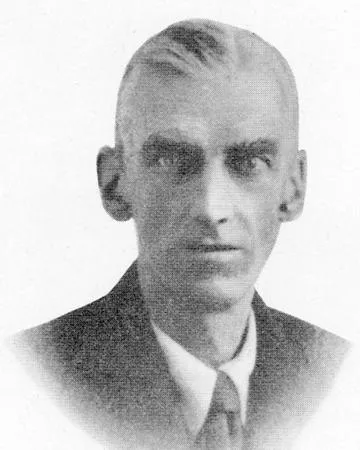
It is not possible to reveal in words the secret of a great personality, the flash of the penetrating eye, or the sound of the memorable voice ; the fruit of the noble and sustaining mind alone remains! At this moment, as I sit here at my desk thinking of the past, and half idly, watch the clouds I love so well pass across the sky, I can see clearly in the eye of the mind, but not alas, put down upon the page as I desire, the strange, compelling and loved image of my friend Bertram Lloyd.
In the words of George Meredith :
When I remember, friend, whom lost I call,
Because a man beloved is taken hence,
The tender humour and the fire of sense
In your good eyes ; how full of heart for all,
And chiefly for the weaker by the wall,
You bore that lamp of sane benevolence ;
Then see I round you Death his shadows dense
Divide, and at your feet his emblems fall.
For surely are you one with the white host,
Spirits, whose memory is our vital air,
Through the great love of Earth they had : lo, these,
Can bid us feel we keep them in the ghost,
Partakers of a strife they joyed to share.
As for his wife, when Bertram passed surely she said with Milton :
How can I live without thee, how forgo
Thy sweet converse and love so dearly joined.
By carrying on his work in the Society for the Abolition of Cruel Sports she found an answer, and we may well feel that her husband’s Spirit to help and counsel is still close by her side.
SAMUEL J. LOOKER.
48, Ingarsby Drive,
Evington, Leicester.
January, 1960.
Check List of the Published Writings of Bertram Lloyd
Anthologies :
Poems Written During the Great War, 1914-1918, George Allen and Unwin, 1918.
The Paths of Glory, George Allen and Unwin, 1919.
The Great Kinship, George Allen and Unwin, 1921.
Foxhunters Philosophy, A Garland From Five Centuries, N.S.A.C.S., 1939.
Essays and Articles in Periodicals :
Birds of Bardsey Island, North Western Naturalist, December, 1934.
A Changed Attitude in Regard to Animals, Vegetarian News, July, 1937.
In Memoriam : Henry S. Salt, Vegetarian News, May, 1939.
A Mass Emergence of the Dragon Fly (Coenagrion puella), The Entomologist, Vol. LXXIV, May, 1941.
Memoir of Charles Oldham, British Birds, Vol. XXXVI, 1942.
In Memoriam : Charles Oldham, North Western Naturalist, June, 1942.
(Bertram died on 9th June, 1944.) From 1935 till his death he edited the Transactions of the Hertfordshire Natural History Society and wrote frequent notes for its pages. He had studied bird song most closely and for some years made a study of the birds of the island of Texel, in Holland. He also contributed to British Birds from 1920 onwards.)
Posthumous.
Prose :
Winter Trees and Tones, The Riverside Press, July, 1949.
Poetry :
Poems and Miscellaneous Translations, The Riverside Press, November, 1953.
Essays and Articles in Periodicals :
The Dragonflies of Pembrokeshire, The Entomologist, 1944.
Late Migration of Swifts, North Western Naturalist, September, 1944.
Increase of Buzzards in Pembrokeshire, North Western Naturalist, December, 1944.
Notes on the Boncath Kite Song, Folk-Lore, December, 1944.
Notes on Folk-Lore of Yellowhammer and Oystercatcher, Folk-Lore, June, 1945.
The Authorship of the Welsh Ambassador, Review of English Studies, July, 1945.
Notes on the Folk-Lore of Pembrokeshire, Folk-Lore, September, 1945.
Stone Curlews in Wiltshire (poem), The New Statesman, November 30th, 1945, reprinted in North Western Naturalist, December, 1946.
List of Pembrokeshire Reptiles, Amphibians and Mammals, North Western Naturalist, September-December, 1945.
Humanitarianism and Freedom, Humane Education Society, Manchester, July, 1947.
The Vertebrate Fauna of Hertfordshire, Transactions of Herts. Natural History Society, November, 1947.
Distribution of the Flora of Pembrokeshire, North Western Naturalist, 1948.
Cardiganshire Sheep-shearing, Tenby and County News, 26th August, 1948.
Translations of Hebbel’s Sommerbild and Winterlandschaft, The Gate, Vol. 1 and Vol. 2, 1947-1949.
The Hope of the World (a poem of protest against the obliteration of German Cities), The Word, December, 1950. (Bertram’s last recorded piece of writing.)
The Authorship of the Valiant Welshman, Notes and Queries, 27th September, 1952.
Printed by G.C.M. Printing Service Ltd., 43, Humberstone Road, Leicester, for Samuel J. Looker, 48, Ingarsby Drive, Evington, Leicester, and Mrs. Sylvia Lloyd, Rickview, Bucklands Wharf, Aylesbury, Bucks.
Publishing Information
1960, 16 pages
Last revised: 26 October 2026