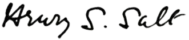


Following the sad death of Jon Wynne-Tyson in 2020, it was only in early 2023 that the Henry Salt Foundation became aware that Henry S. Salt’s personal collection had been sold at auction. The discovery came as a considerable shock, particularly because Jon had personally told several admirers of Henry Salt, including myself, that the collection would be given to the West Sussex Record Office.
The collection had been entrusted to Jon by Catherine Salt, Henry’s widow. She had preserved this material and placed her trust in someone she believed would ensure that it remained safe and available for the future.
A history of misplaced trust
This was not the first time Catherine Salt had been let down by someone who was supposed to be helping preserve her husband’s legacy.
Catherine had previously felt betrayed by Stephen Winsten, the author of Salt and His Circle. She had lent him material to assist with his research and the writing of the biography, but he did not return it. For Catherine, who had spent so much of her life safeguarding Henry’s papers and possessions, this was a deeply disappointing experience.
Her decision to entrust the personal collection to Jon Wynne-Tyson was an act of trust. It is particularly sad, therefore, that the collection’s eventual fate should have repeated that earlier experience.
Catherine’s decision to preserve the collection
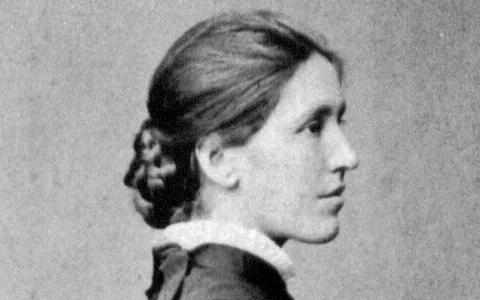
Catherine could have sold Henry’s collection during her lifetime. Her own circumstances were comparatively modest, and she was not in a position of financial comfort. Yet, despite the potential financial value of the books and papers, she chose to keep them rather than sell them. There is no indication that she sought to turn the collection into money for herself.
That decision deserves recognition. Catherine understood the importance of preserving the material associated with Henry’s life and work. The collection was not simply a collection of valuable books and documents; it represented a substantial part of his personal and intellectual life.
The contrast with what happened after Jon Wynne-Tyson’s death is difficult to ignore. Jon was in a considerably more comfortable financial position than Catherine had been, yet the collection was sold by his estate rather than being transferred to the public archive he had told admirers it would go to. Whatever the circumstances or reasoning behind the sale, the outcome was that Catherine’s hope of seeing the collection preserved for the future was not fulfilled.
What was lost?
Henry Salt’s personal collection contained material of considerable interest to anyone studying his life, work and circle. It included books, papers, correspondence and other personal material which, taken together, offered a valuable insight into the man behind the published writings.
The importance of such a collection lies not only in the individual items, but in their relationship to one another. Kept together, catalogued and made available through a public archive, the material could have provided a lasting resource for researchers, historians and anyone interested in Henry Salt. It could also have helped answer questions about his life and work that have yet to be explored.
Once a collection is sold at auction, there is no guarantee that it will remain together. Items may pass into private hands, and their whereabouts and availability can become difficult to establish. We cannot assume that every item is now inaccessible, but the opportunity to preserve the collection as a coherent public resource has been lost.
A copy of Jon Wynne-Tyson’s will, together with its 2018 codicil, was obtained by the Foundation. Neither document makes any specific reference to Henry Salt or his personal collection, nor is there any provision directing that the collection should be donated to the West Sussex Record Office or another public institution. The will provides for the distribution of his residuary estate between his two daughters. This does not tell us whether separate arrangements or discussions took place, but it does mean that the promised donation is not reflected in the will.
A legacy that deserved better
Catherine Salt preserved Henry’s personal collection throughout her lifetime. Despite her comparatively modest circumstances, she did not sell it. She entrusted it to others in the hope that it would be safeguarded and eventually made available to the public.
First, material lent to Stephen Winsten for his biography was not returned. Later, a much larger collection, which Jon Wynne-Tyson had personally assured admirers would go to the West Sussex Record Office, was sold following his death.
We may never know where all the material has gone, or whether it will ever be possible to bring it together again. But the history deserves to be recorded. This is not simply a matter of books and papers changing hands. It is the loss of an opportunity to preserve an important part of Henry Salt’s life and make it accessible to everyone.
Catherine’s decision to preserve the collection should have been respected. A collection such as this should have been preserved for everyone, not sold to the highest bidder.
Can you help trace the collection?
The Foundation would particularly welcome information about the collection’s whereabouts. If anyone knows who purchased items at the auction, or has any information about where the books, papers and other material may now be held, we would be very pleased to hear from them.
We would also welcome contact from anyone connected with Jon Wynne-Tyson who might be able to shed further light on what happened to the collection. We appreciate that the passage of time may make this difficult, but even a small piece of information could help us establish where the material went.
Our aim is to trace as much of the collection as possible and, if circumstances allow, help make the material accessible to those interested in Henry Salt and his work. If you can help, please contact the Henry Salt Foundation.
The dispersal of the collection need not mean that its history ends here. We would welcome any information that might help us piece together what happened.