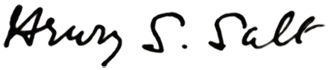

Charles Francis Allnatt (9 August 1837 – 1 June 1903) was the only son of Charles Blake Allnatt (1792–1862), a barrister, and Elizabeth Sophia Allnatt, née Möller (1798–1871). He was the brother of Ellen Matilda Allnatt, Henry S. Salt’s mother, and Emily Augusta Allnatt, who later became Lady Durand.
Charles was born in Shrewsbury and attended Trinity College, Dublin. He subsequently converted to Roman Catholicism, a decision that placed him among those who crossed the religious divisions of Victorian Britain at a time when conversion could provoke considerable hostility.
Conversion and hostility
The strength of feeling that conversion could arouse is illustrated by a report in the Irish Ecclesiastical Gazette, 17 July 1880, p. 10. Entitled “Rome’s Recruits”, the report referred to Allnatt as a “pervert”, a derogatory term then used for someone who had converted to Catholicism from Protestantism.
Several years earlier, the Eddowes’s Shrewsbury Journal, 7 October 1868, p. 4, had published a notice in which Allnatt offered a reward of £10 for evidence sufficient to expose those responsible for what he described as malicious falsehoods and annoyances directed against him. The notice referred to alleged insinuations and the employment of “spies and secret agents”.
The later newspaper report illustrates the hostility that Catholic converts could encounter and raises the possibility that religious prejudice may have contributed to the earlier episode. The reports do not, however, establish whether the incidents were connected.
His will and fear of interference after death
Allnatt’s concerns about his treatment by others also appear in the provisions of his will, made in 1901. He included detailed instructions for a post-mortem examination, with particular attention to his heart, and required that his head be completely severed from his spinal column before his body was removed from the house.
His will specified that Dr Johns, of 3 Lansdown Place, Cheltenham, or another competent doctor, should receive ten guineas for carrying out the procedure. His landlady was to receive £5 for permitting it to take place in the house.
The will also records Allnatt’s belief that hostile mesmerism or hypnotism had been directed against him for more than twenty-five years. These provisions offer a striking insight into his fears and the measures he wished to take to protect himself after death. The surviving evidence does not establish the basis for those beliefs.
Henry Salt’s recollections
Henry S. Salt recalled an extraordinary incident involving his uncle in his autobiography, Company I Have Kept. According to Salt, Charles suggested that Henry might benefit under his will if he guaranteed that Charles’s head would be removed after death. Henry declined.
The anecdote gives a personal dimension to the instructions in the will, showing that Allnatt’s concerns were not confined to a formal legal document but were also discussed with members of his family.
His fears about being wrongly regarded as dead have an interesting parallel with the family story of Sarah Bolde, another relative who was reportedly believed dead after an attack of catalepsy when she was sixteen. Sarah’s story was preserved in the Salt family records. There is no known evidence connecting her experience with Allnatt’s wishes, and the family member who shared her story was unaware of his fears.
Death and legacy
Charles Francis Allnatt died in Cheltenham on 1 June 1903, aged 65.
The surviving newspaper reports, his will and Henry Salt’s autobiographical recollection provide different glimpses of a man whose life was marked by strong religious convictions and pronounced fears about the treatment he might receive from others. They also leave questions unanswered, particularly about the circumstances behind his complaints of harassment and the origins of his concerns about interference after death.